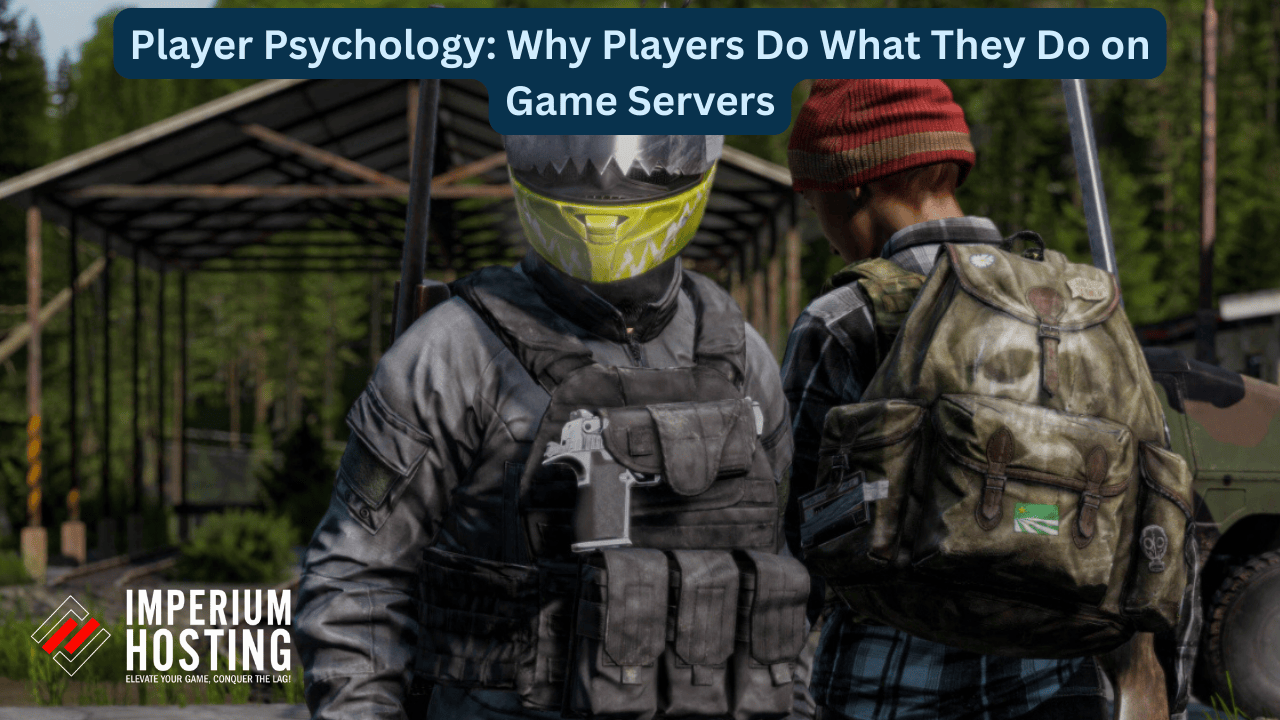
Players rarely behave the way server owners expect them to.
They hoard loot they don’t need.
They avoid “optimal” paths.
They form attachments to places, routines, and people.
They leave servers that look perfect on paper.
That’s because players don’t respond to systems alone -
they respond to how those systems make them feel.
Understanding player psychology isn’t about manipulation.
It’s about designing environments people actually want to stay in.
Players are emotion-driven, not logic-driven
From the outside, player behavior can look irrational.
Why would someone:
-
Log in daily just to sit by a fire?
-
Stay on a low-population server instead of a bigger one?
-
Choose PvE over PvP when “nothing happens”?
Because players are driven by:
-
Safety
-
Belonging
-
Competence
-
Agency
These needs matter just as much in games as they do in real life.
Fear creates attention - but not attachment
Fear is powerful.
It sharpens focus.
It creates adrenaline.
That’s why hardcore survival works so well in short bursts - especially in games like DayZ.
But fear alone doesn’t build loyalty.
When fear is constant:
-
Players stop experimenting
-
Curiosity dies
-
Emotional investment drops
Fear keeps players alert.
It doesn’t make them care.
Belonging is what turns servers into “Places”
The moment a server stops feeling like a system
and starts feeling like a place, player behavior changes.
They:
-
Take responsibility
-
Help newcomers
-
Defend community norms
-
Stay through bugs and wipes
This is why smaller communities often outperform larger ones in retention - especially in games like Valheim and Minecraft.
Belonging turns play into presence.
Clarity reduces anxiety, not challenge
One of the biggest psychological stressors for players isn’t difficulty, it’s uncertainty without explanation.
Players can handle low loot, harsh weather and tough enemies, but they struggle with unclear rules, silent changes and inconsistent enforcement
Clarity allows players to fail productively.
Confusion makes failure feel personal.
Fairness builds trust faster than rewards
Trust is a psychological shortcut.
When players trust a server:
-
They assume good intent
-
They forgive mistakes
-
They stay longer
Fairness doesn’t mean leniency.
It means:
-
Predictable systems
-
Transparent decisions
-
Equal rules for everyone
Once trust is gone, every system feels hostile - even if nothing actually changed.
Why this matters for server owners
If you understand player psychology, you stop asking: “How do I make players behave?”, and start asking: “What kind of environment invites the behavior I want?”
That shift changes everything:
-
Your rules
-
Your settings
-
Your communication
-
Your community culture
Players aren’t spreadsheets. They’re humans looking for safety, meaning and connection.
Servers that understand this don’t just grow - they last.

Comments (0)
No comments yet. Be the first to comment!